
€950/mo per provider module, on top of your plan
PSP providers
A regulated payment institution, connected to your workspace.
For fund flows that need more than a card checkout: segregated client-money wallets, mandates, payouts and disputes — each tenant on its own licensed provider account.
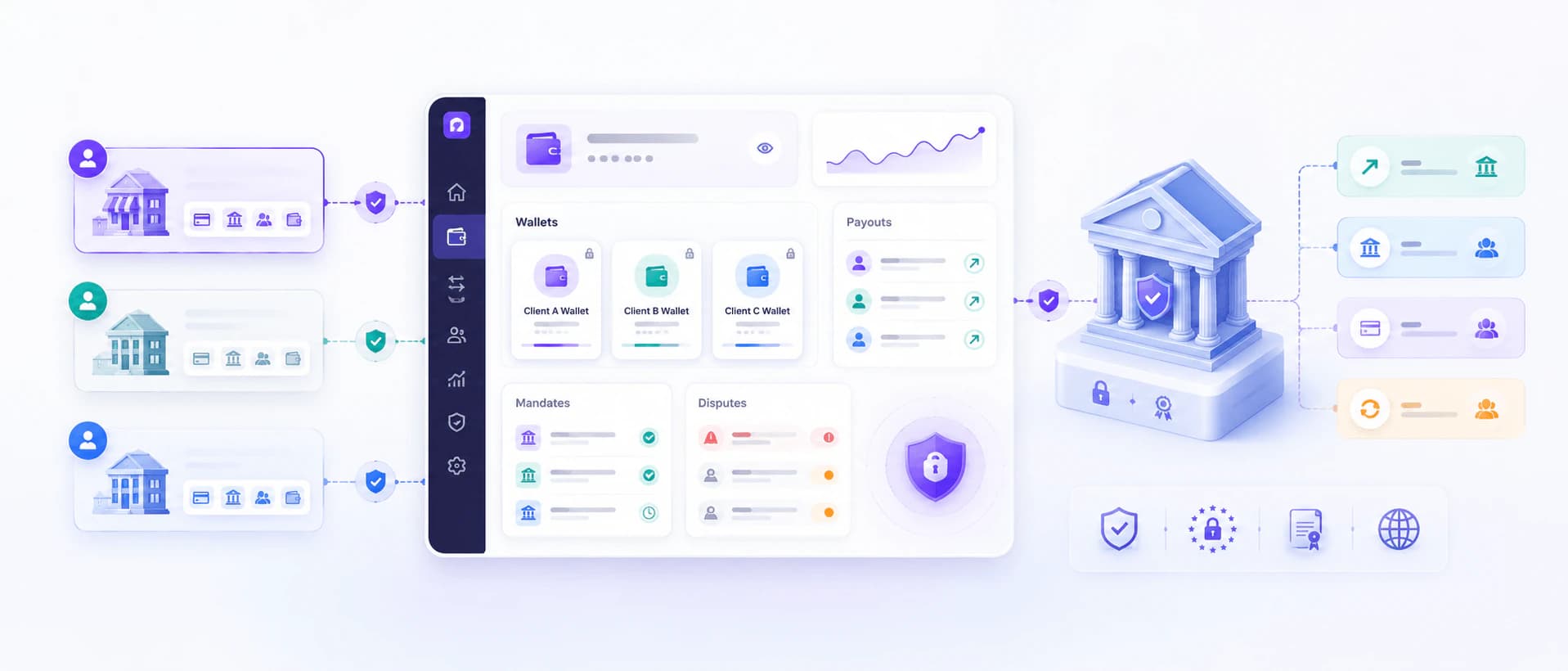
- Provider modules
- 4
- Shared or house accounts
- 0
- Raw card data stored
- Never
Your licence, your keys
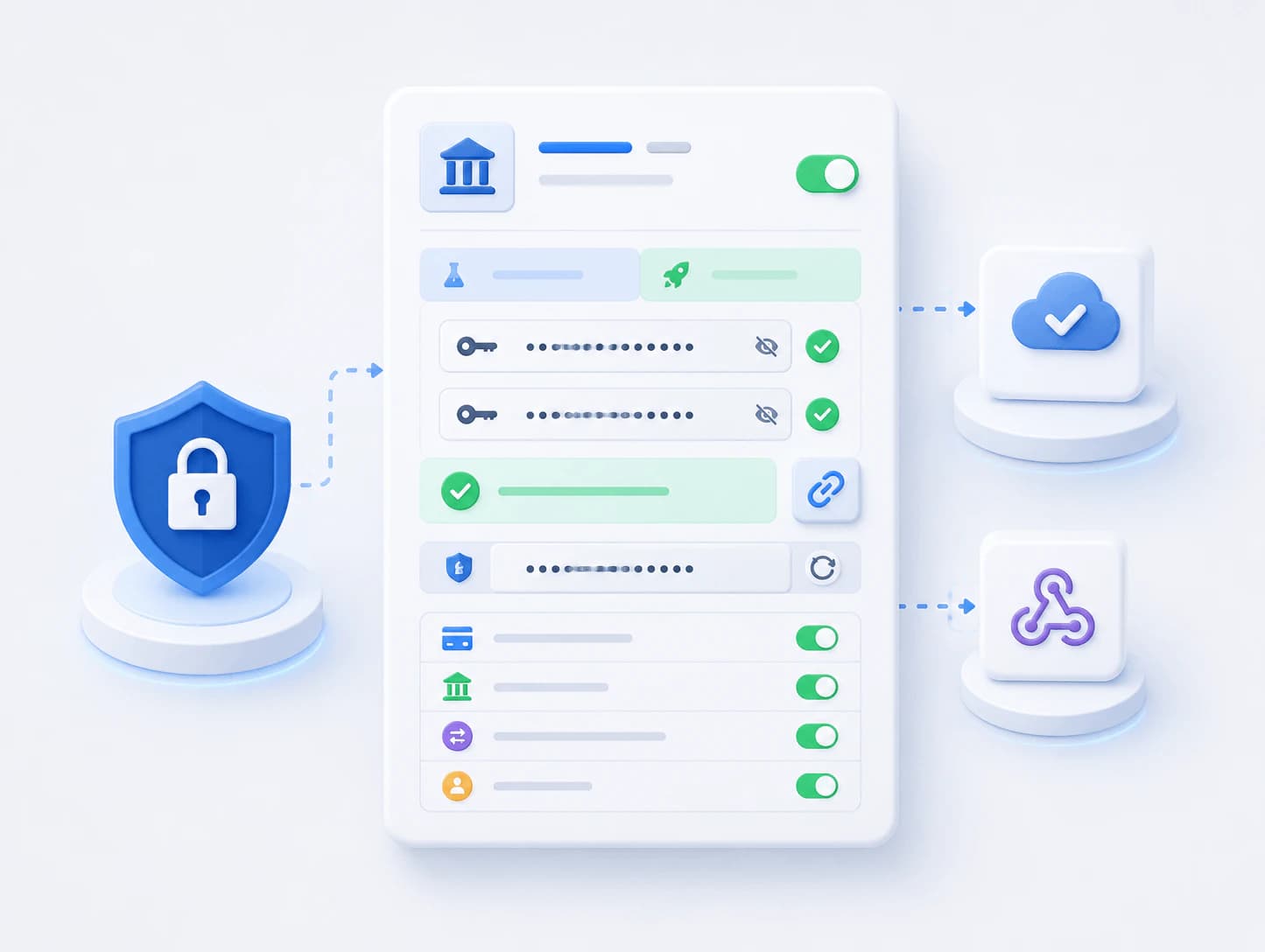
Each provider is its own installable module. The tenant holds the provider contract and enters its own API keys — the platform supplies the software only.
- Sandbox and production environments with separate keys
- Keys encrypted at rest and write-only — never shown back, never logged
- A test-connection button that proves saved credentials work
- Webhook secrets stored per key, with rotation support
- A master switch plus per-capability toggles
Regulated money flows
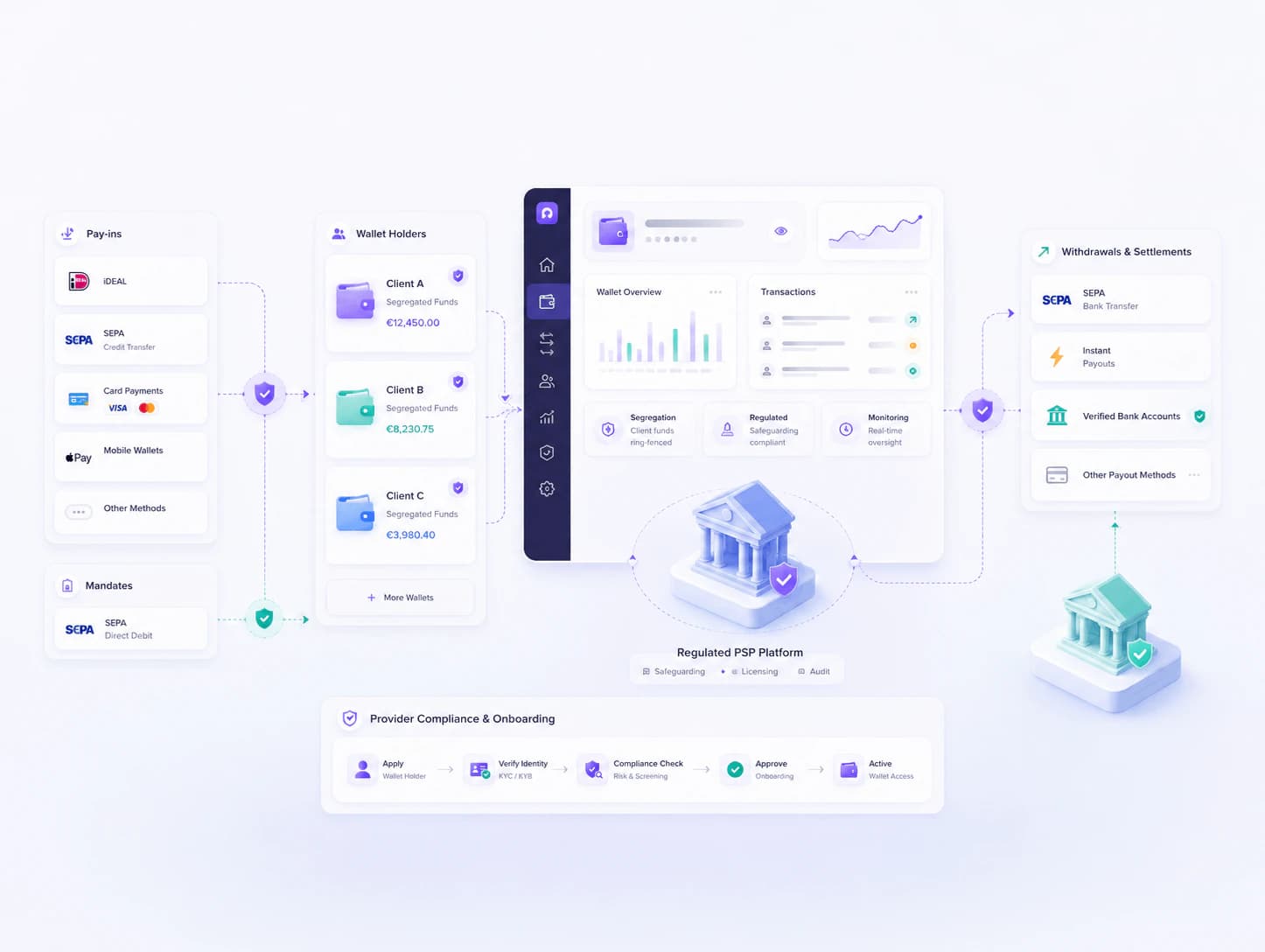
These institutions are licensed for platform money: per-user wallets with segregated funds, escrow-style flows and compliant payouts — what fundraising legally needs and a plain card processor cannot provide.
- Per-user wallets with segregated client money
- Pay-ins by iDEAL, SEPA, cards and more, per provider
- SEPA direct-debit mandates
- Withdrawals and settlements to verified bank accounts
- Provider-side compliance onboarding of wallet holders
A full back office in the panel
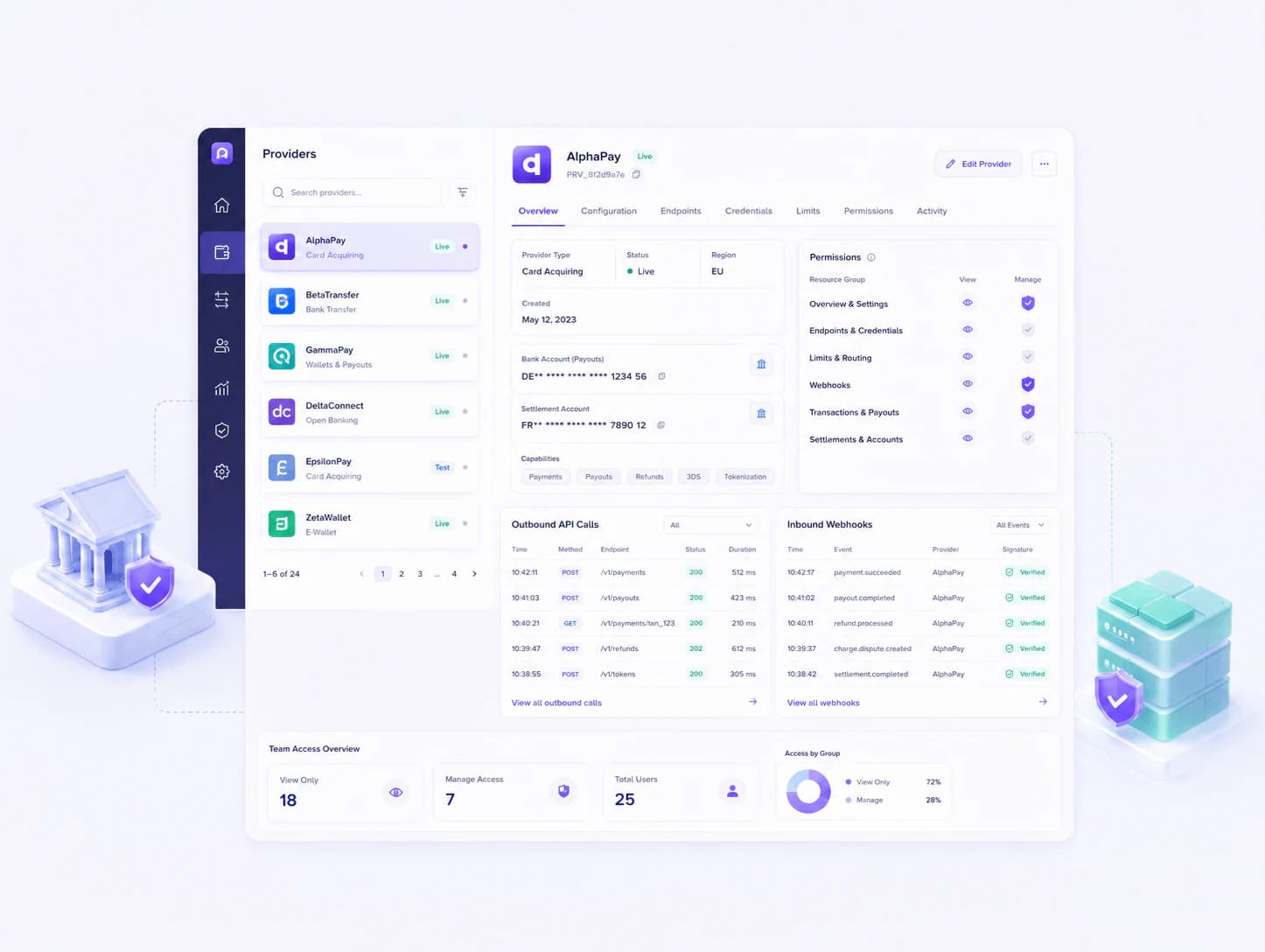
Operators manage every provider object from the admin panel — never a database client or an API tool.
- Paged list and detail screens for every provider resource
- A browsable log of every outbound API call
- An inbound webhook log with signature verification
- IBANs masked everywhere; separate view and manage permissions per resource group
A wallet page for end users
The same integration powers a self-service wallet for the tenant's end users — every wallet they hold, across providers, on one page.
- Balance and history — own wallet only, enforced on the server
- Deposit, withdraw and connect a bank account
- Verification status with a deep link to finish it
- Multiple providers side by side on one page
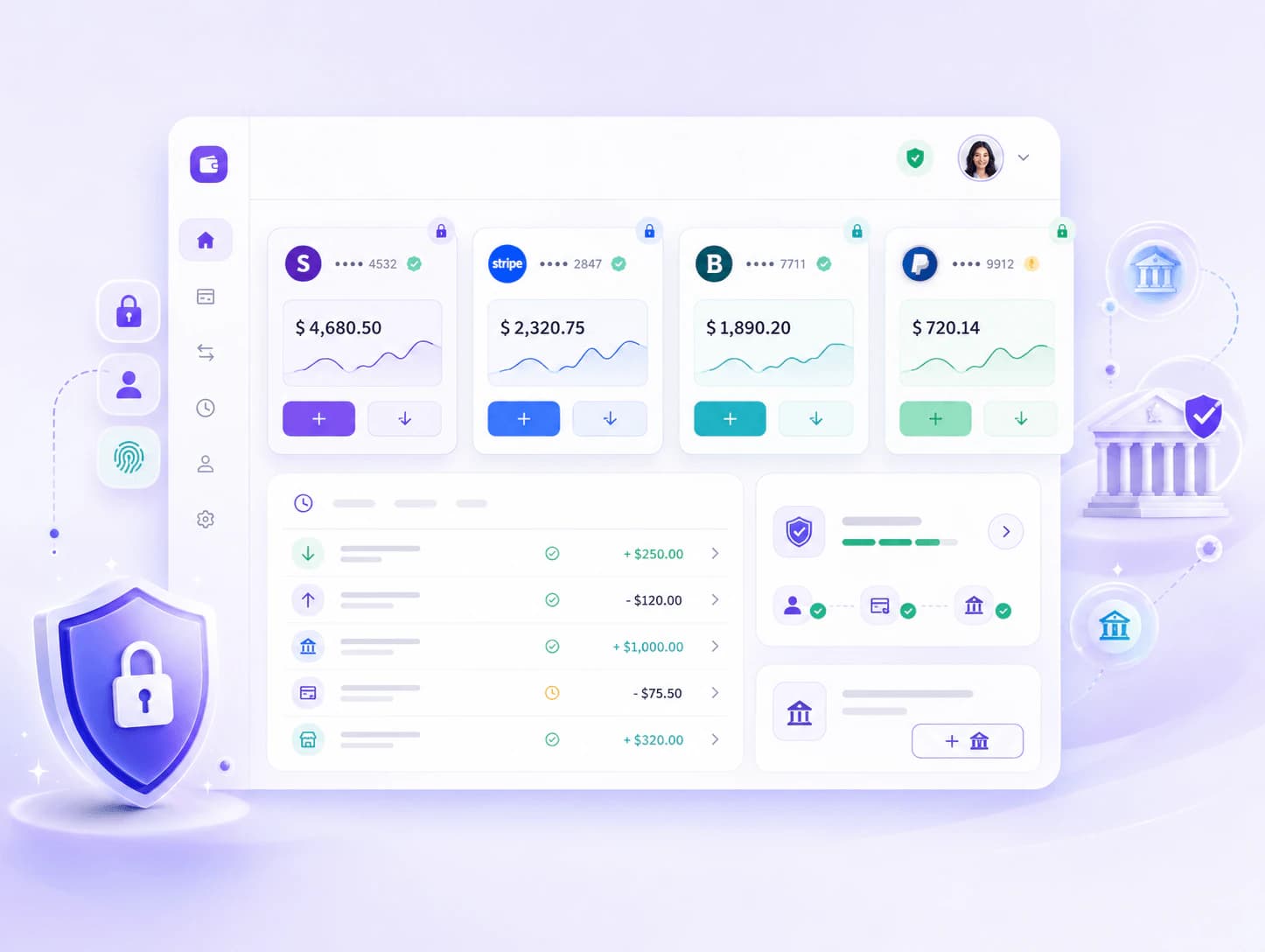
Other modules plug in, never around
A PSP module is the only code that talks to its provider; everything else goes through its published contract and events.
- Stable events for every state change — payments, mandates, payouts, disputes
- Request events so a consumer module can ask for a pay-in or payout
- Installing one provider never couples you to another
Worth knowing: OPP is the fully built provider module today; Mangopay, Lemonway and Adyen follow on the same contract. There is never a shared or house account — no configured provider means the flow stops with a clear message.
What every module inherits.
- Installs from the marketplace with no redeploy — the menu and the permission list update immediately.
- Creates its own tables, in its own schema, inside that customer's database.
- Packages are cryptographically signed when they are built, and the signature is checked before the host unpacks one.
- Uninstall switches a module off and keeps its data. Dropping the tables is a separate, deliberate choice.
Works with
Want to see PSP providers running?
Thirty minutes, a live workspace, and an honest answer about what each module does and doesn't do yet. Missing a module? A custom build is a fixed-scope project, from €25.000.
Book a call